
Echosens
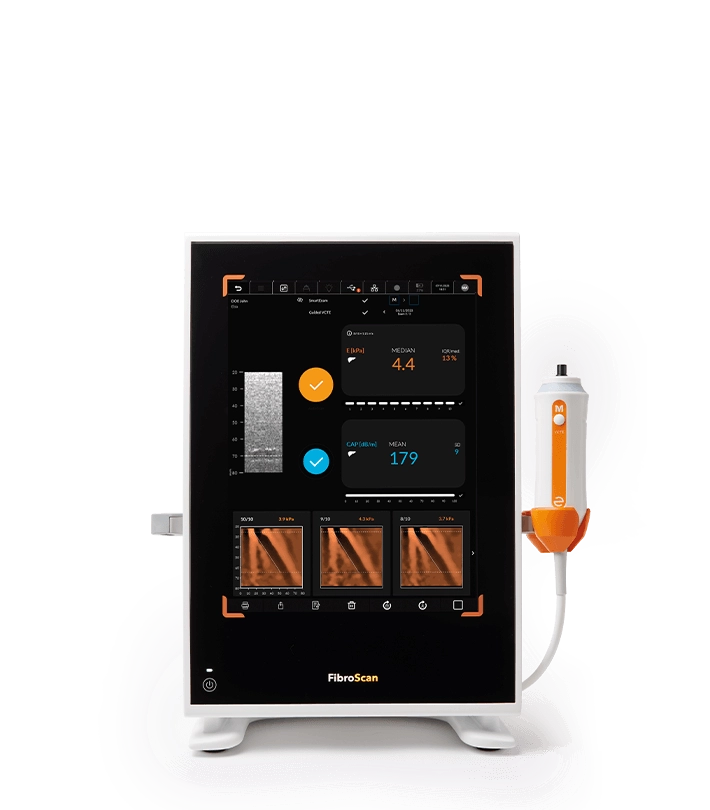
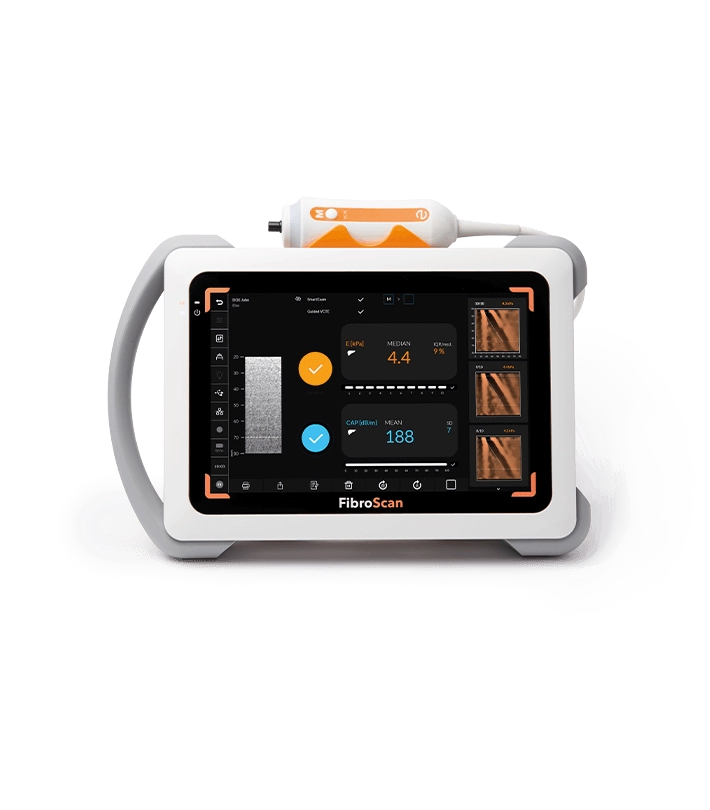
Fibroscan Mini 430
Contact our team for pricing, configuration options and availability.
Thanks! Our team will contact you shortly.
The FibroScan Mini 430 from Echosens is a compact, portable device for the non-invasive assessment of the liver. It uses Vibration-Controlled Transient Elastography (VCTE) to estimate liver stiffness and the Controlled Attenuation Parameter (CAP) to assess liver steatosis, at the point of care and without a biopsy.
At a glance
- Non-invasive, painless examination — no sedation, results available at the point of care
- VCTE liver stiffness measurement plus CAP for steatosis assessment
- Compact, portable form factor designed for primary care and decentralised clinics
- Examination completed in a few minutes by a trained operator
- Probe options to suit different patient body habitus
The FibroScan Mini 430 is a portable liver assessment device manufactured by Echosens. It brings Vibration-Controlled Transient Elastography (VCTE) — the technology used across the FibroScan range — into a compact unit intended for primary care, hepatology and gastroenterology clinics, diabetes and endocrinology services, and other decentralised settings.
What does the FibroScan Mini 430 do?
The device performs two non-invasive measurements from the same examination. Liver stiffness measurement (LSM), reported in kilopascals (kPa), reflects the elastic properties of liver tissue. The Controlled Attenuation Parameter (CAP), reported in dB/m, provides an assessment of liver steatosis (fat). Both results are available immediately, so the clinician can discuss them with the patient during the same visit.
How does VCTE work?
A probe placed on the skin over the right lobe of the liver generates a low-frequency mechanical pulse. The device measures how quickly the resulting shear wave travels through the tissue; stiffer tissue conducts the wave faster. The examination is quick, painless and requires no contrast or sedation.
Where is it used?
- Assessment and follow-up of chronic liver disease, including metabolic dysfunction-associated steatotic liver disease (MASLD/MASH), alcohol-related liver disease and viral hepatitis
- Risk stratification and monitoring in hepatology and gastroenterology outpatient clinics
- Case-finding in primary care, diabetes and endocrinology services where liver disease is common but under-recognised
- Community screening and outreach programmes that need a portable option
Clinical context
FibroScan results support, and do not replace, clinical assessment. Interpretation thresholds depend on the underlying cause of liver disease and on current clinical guidelines, and certain conditions can affect measurement quality. Results should always be read alongside history, examination and other investigations by a qualified clinician.
Kanlife supplies the FibroScan Mini 430 with application training and service support across India. Contact our team for configuration options, probe availability and pricing.
Frequently asked questions
What is the FibroScan Mini 430 used for?
It is used for the non-invasive assessment of the liver — estimating liver stiffness (a marker used in the evaluation of fibrosis) and assessing liver steatosis (fat) using the CAP parameter, without a liver biopsy.
Is a FibroScan examination painful?
No. The examination is non-invasive and painless. A probe is placed on the skin over the liver; there are no needles, no contrast and no sedation.
How long does the examination take?
The measurement itself takes only a few minutes when performed by a trained operator, and results are available immediately at the point of care.
How is the FibroScan Mini 430 different from the Compact 530 and 630 Expert?
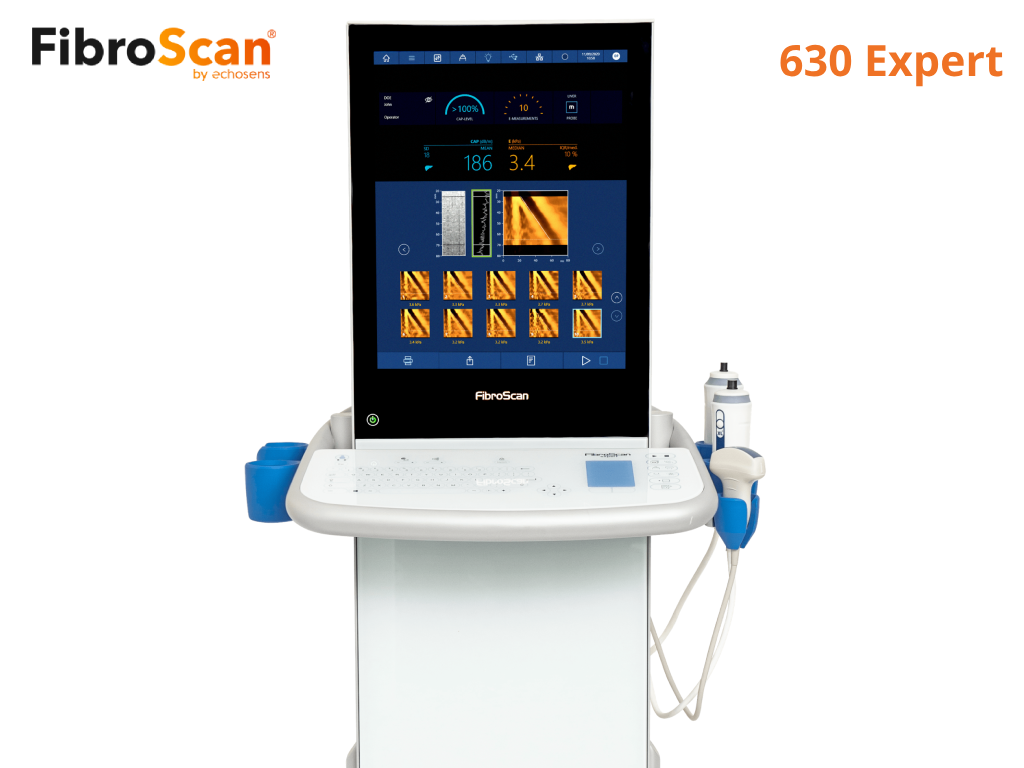
All three use the same VCTE technology. The Mini 430 is the most compact and portable option, suited to primary care and decentralised clinics; the Compact 530 and 630 Expert offer larger consoles and an extended feature set for higher-volume hepatology services.
Does FibroScan replace a liver biopsy?
It is a non-invasive alternative that is widely used to reduce the need for biopsy, but biopsy remains a reference investigation in selected cases. Interpretation depends on the cause of liver disease and current guidelines and should be done by a clinician.
Related products
Related reading
Liver/Hepatology
How Fibroscan Simplifies Non-Invasive Liver Assessment
Learn how Fibroscan technology is revolutionizing non-invasive liver assessment, providing accurate results without the need for invasive procedures.
Read article Liver/HepatologyThe Role of Non-Invasive Liver Fibrosis Assessment in Hepatology
This article discusses the importance of non-invasive liver fibrosis assessment in hepatology, focusing on techniques like FibroScan and their clinical applications.
Read article