
Echosens
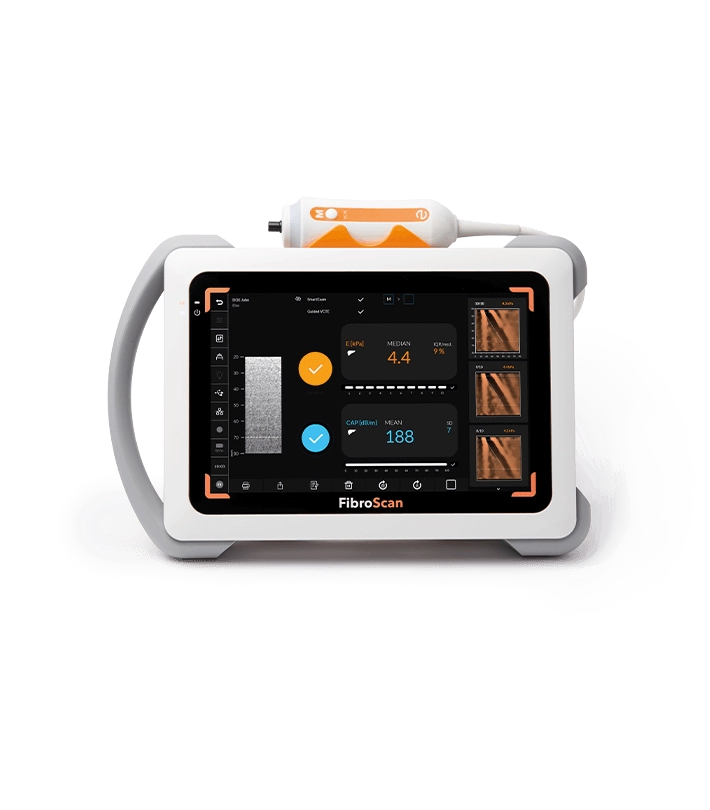
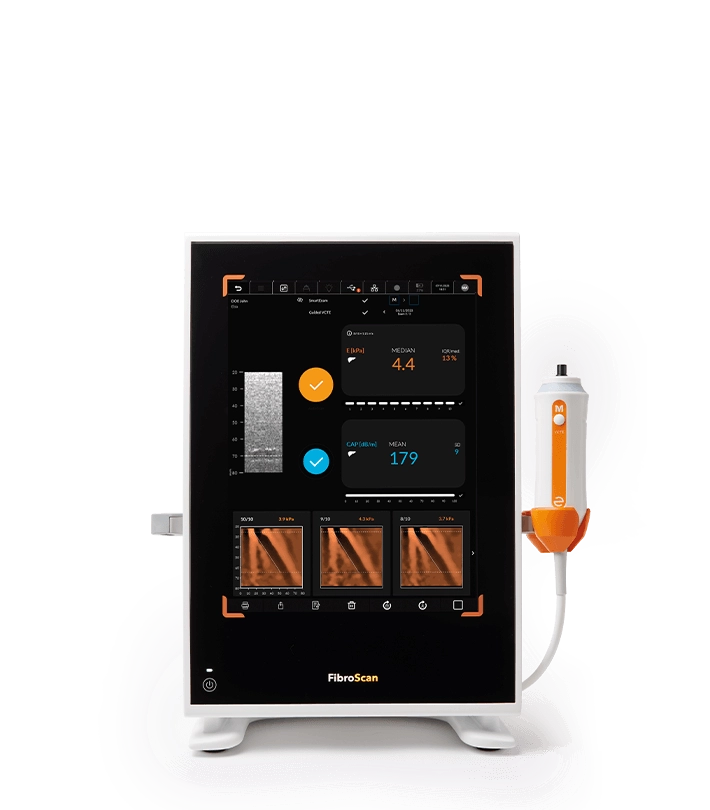
Fibroscan Compact 530
Contact our team for pricing, configuration options and availability.
Thanks! Our team will contact you shortly.
The FibroScan Compact 530 from Echosens is a space-efficient console for non-invasive liver assessment. It uses Vibration-Controlled Transient Elastography (VCTE) for liver stiffness measurement and the Controlled Attenuation Parameter (CAP) for steatosis assessment, with immediate results and no biopsy.
At a glance
- Non-invasive, painless liver assessment — no biopsy, no sedation
- VCTE liver stiffness measurement plus CAP steatosis assessment
- Space-efficient console suited to outpatient hepatology and gastroenterology
- Immediate point-of-care results for same-visit discussion
- Probe options for different patient body habitus
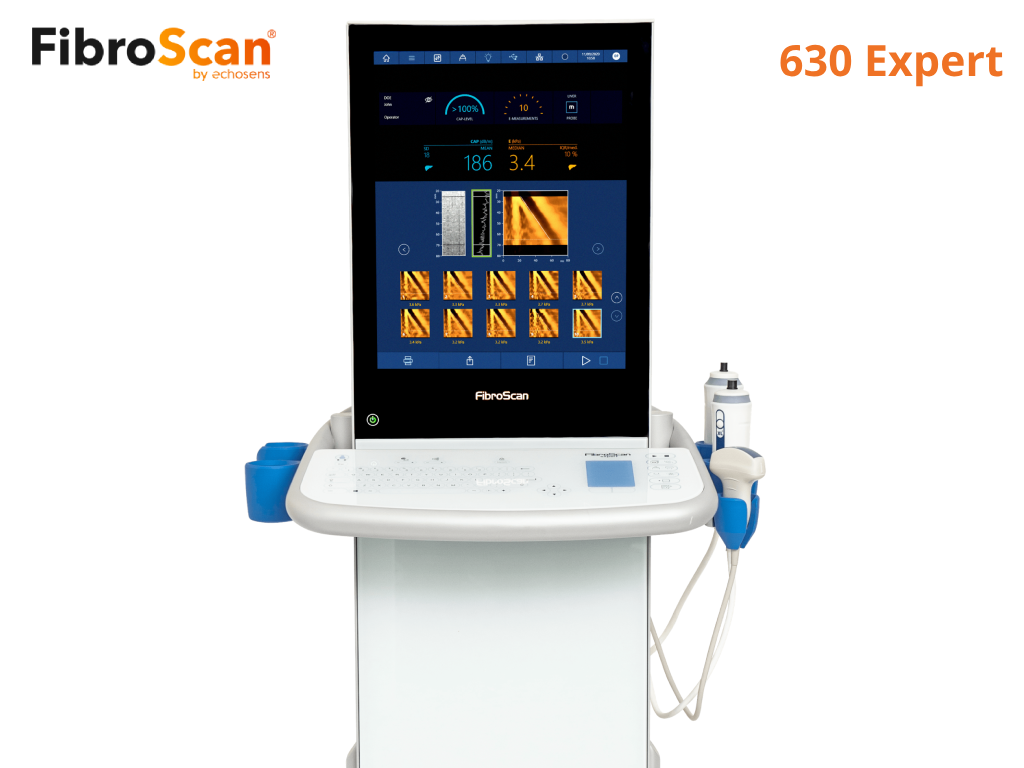
The FibroScan Compact 530 is a non-invasive liver assessment device from Echosens. It sits between the portable FibroScan Mini 430 and the flagship FibroScan 630 Expert, giving hepatology, gastroenterology and metabolic clinics a console-based option in a modest footprint.
What is the FibroScan Compact 530?
It is a device that uses Vibration-Controlled Transient Elastography (VCTE) to estimate liver stiffness (reported in kPa) and the Controlled Attenuation Parameter (CAP) to assess liver steatosis (reported in dB/m). Both values come from a single, quick examination and are available immediately.
How the examination works
An operator places a probe on the skin over the right lobe of the liver. The probe produces a small mechanical pulse and the device measures the speed of the resulting shear wave through the tissue — faster propagation indicates stiffer tissue. Nothing is injected and no sedation is required.
Where it is used
- Evaluation and monitoring of chronic liver disease, including MASLD/MASH, alcohol-related liver disease and viral hepatitis
- Outpatient hepatology and gastroenterology clinics that need repeatable, non-invasive assessment
- Metabolic, diabetes and endocrinology services identifying at-risk patients
Interpreting results
FibroScan measurements are one input into clinical assessment. Cut-offs depend on the underlying aetiology and on current guidelines, and measurement quality can be affected by factors such as body habitus, ascites and narrow rib spaces. Results should be interpreted by a qualified clinician alongside the full clinical picture.
Kanlife supplies the FibroScan Compact 530 with training and after-sales support in India. Contact us for probe options, configuration and pricing.
Frequently asked questions
What does the FibroScan Compact 530 measure?
Liver stiffness (via VCTE, reported in kPa) and liver steatosis (via the CAP parameter, reported in dB/m), from a single non-invasive examination.
Is the Compact 530 suitable for a busy outpatient clinic?
Yes. It is a console device with a compact footprint intended for outpatient hepatology, gastroenterology and metabolic clinics that need repeatable non-invasive assessment.
Does the patient need any preparation?
Fasting is commonly recommended before a FibroScan examination because recent food intake can affect measurements. Follow your local clinical protocol and current guidance.
How does it compare with the FibroScan 630 Expert?
Both use the same VCTE technology. The 630 Expert is the flagship console with the most complete feature set for high-volume hepatology; the Compact 530 covers the same core assessment in a smaller, more economical package.
Related products
Related reading
Liver/Hepatology
How Fibroscan Simplifies Non-Invasive Liver Assessment
Learn how Fibroscan technology is revolutionizing non-invasive liver assessment, providing accurate results without the need for invasive procedures.
Read article Liver/HepatologyThe Role of Non-Invasive Liver Fibrosis Assessment in Hepatology
This article discusses the importance of non-invasive liver fibrosis assessment in hepatology, focusing on techniques like FibroScan and their clinical applications.
Read article