

Medtronic
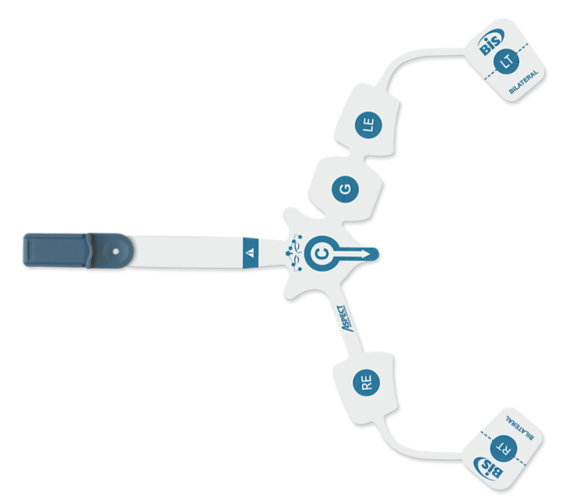
BIS Bilateral Sensor | 186-0212
Contact our team for pricing, configuration options and availability.
Thanks! Our team will contact you shortly.
Box of 10.
Part Number / CFN : 186-0212.
Not compatible with BIS 2-channel systems. BIS LOC 4-channel cables required.
Lets you detect hemispheric differences in the brain, which may prove useful for advanced monitoring applications.
At a glance
- Symmetrical bilateral placement captures EEG data from both brain hemispheres at once
- Detects hemispheric differences that may be useful for advanced monitoring in select patients
- Peel-and-stick application with Zipprep self-prepping technology for reliable skin contact
- Resistant to artifact from electrocautery devices during surgery
- Supplied as single-patient-use sensors, box of 10
- Requires BIS LoC 4-channel cables - not compatible with BIS 2-channel systems
OVERVIEW
Gain insight into brain response with BIS™ technology.
BIS™ technology offers clinicians added security for providing specialized care and comfort for their patients, including those who may be more sensitive to the hemodynamic effects of anesthesia.
BIS™ monitoring technology provides clinicians with valuable information about patient status to help address each patient’s unique anesthetic requirements. This technology may be particularly valuable for:
- Patients with complex conditions whose status may suddenly or frequently change.
- Patients with cardiovascular conditions.
- Obese patients.
- Trauma patients or others requiring reduced levels of anesthesia
FEATURES
- The BIS™ bilateral sensor is designed for symmetrical placement to capture bi-hemispheric data.
- The BIS™ bilateral sensor offers:
- Peel-and-stick simplicity
- Zipprep™ technology
- The BIS™ bilateral sensor enables detection of hemispheric differences in the brain, which may prove useful for advanced monitoring applications.†
- BIS™ sensors collect electroencephalograph (EEG) data.
- BIS™ technology enables simple EEG data collection via a noninvasive sensor applied to the patient’s forehead.
- BIS™ sensors are resistant to artifact from electrocautery devices.
Frequently asked questions
What is the BIS Bilateral Sensor used for?
It is a BIS™ sensor designed for symmetrical bilateral placement to capture EEG data from both brain hemispheres, helping detect hemispheric differences for advanced monitoring.
Is it compatible with BIS 2-channel systems?
No — it requires BIS LoC 4-channel cables and is not compatible with BIS 2-channel systems.
How is the sensor applied?
It uses peel-and-stick application with Zipprep™ self-prepping technology for reliable skin contact.
Is it affected by electrocautery during surgery?
No, it is resistant to artifact from electrocautery devices.
How is it packaged?
It is supplied as single-patient-use sensors, in a box of 10 (Part Number / CFN 186-0212).
Which patients might benefit most from bilateral monitoring?
It may be particularly useful for patients with complex or changing conditions, cardiovascular conditions, obesity, or trauma patients requiring reduced anesthesia levels.
Related products
Related reading
Anesthesia
Understanding BIS Cerebral Monitoring in Anesthesia
BIS cerebral monitoring is a vital tool in anesthesia that enhances patient safety by accurately assessing the depth of anesthesia.
Read article AnesthesiaUnderstanding the Role of Anesthesia in Pediatric Surgery: Best Practices and Equipment
This article delves into pediatric anesthesia's critical role in surgery, emphasizing best practices and the necessary equipment to ensure safety in NICU settings.
Read article