
Skanray
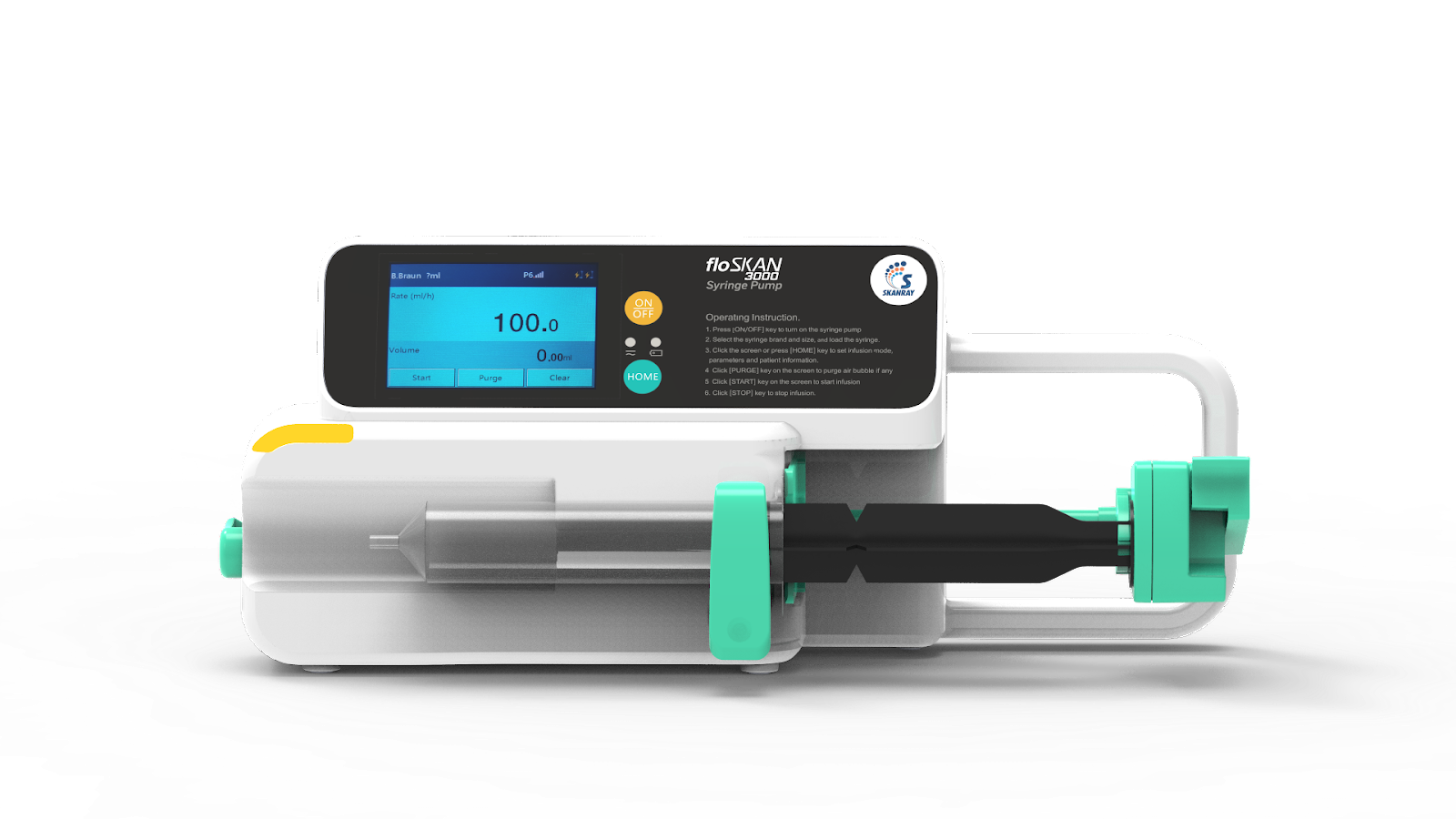
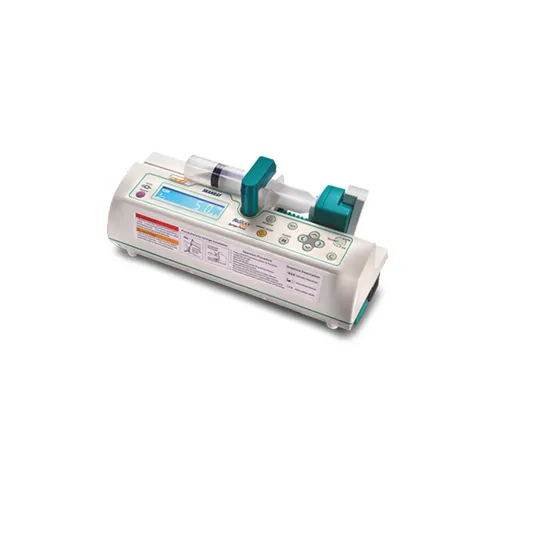
Floskan 2000 | Syringe Pump
Contact our team for pricing, configuration options and availability.
Thanks! Our team will contact you shortly.
- Multiple infusion modes and Anti-bolus
- 3 preset occlusion levels
- Accurate transmission mechanism
At a glance
- Micro-continuous syringe pump with multiple infusion modes and anti-bolus control
- Supports multi-brand syringes from 10ml up to 50/60ml, with speeds up to 2000 ml/h
- Built-in drug library to help standardize infusion setup
- 3 preset occlusion levels plus a safety design to help monitor infusion status
- Minimum 8-hour battery backup for uninterrupted therapy during transport or a power loss
- Compliant with IEC and ISO medical device guidelines
- Supports multi-brand syringes
- Compatible with 10, 20, 30 & 50 (60) ml syringes
- Large speed range (up to 2000 ml/h for 50 (60) ml syringe)
- Built-in Drug library
- Safety design to aid in monitoring infusion status
- Backup power for a minimum of 8 hours
- Compliant with IEC and ISO guidelines
Frequently asked questions
What is the floSKAN 2000 used for?
It is a syringe infusion pump used to deliver precise, continuous doses of medication or fluids intravenously, commonly used in ICU, OT and general ward settings.
Which syringe sizes are compatible?
It supports multi-brand syringes of 10, 20, 30 and 50 (60) ml.
How does it help prevent dosing errors?
It includes a built-in drug library, an anti-bolus function, and 3 preset occlusion levels, along with a safety design that helps clinicians monitor infusion status continuously.
What happens if there's a power outage?
The pump has backup power for a minimum of 8 hours, so infusion can continue uninterrupted during a mains failure.
Is the pump compliant with medical safety standards?
Yes, it is compliant with IEC and ISO guidelines for infusion pumps.
Is training required to operate it?
Yes, nursing and clinical staff should be trained on programming infusion modes, drug library use, and occlusion alarms before use.
Related products
Related reading
Emergency
The Evolution of Video Laryngoscopy: A Comparative Study of Devices in Emergency Settings
This article explores the evolution of video laryngoscopy devices in emergency settings, highlighting their impact on patient outcomes and clinical practice.
Read article AnesthesiaUnderstanding the Role of Anesthesia in Pediatric Surgery: Best Practices and Equipment
This article delves into pediatric anesthesia's critical role in surgery, emphasizing best practices and the necessary equipment to ensure safety in NICU settings.
Read article