
Skanray
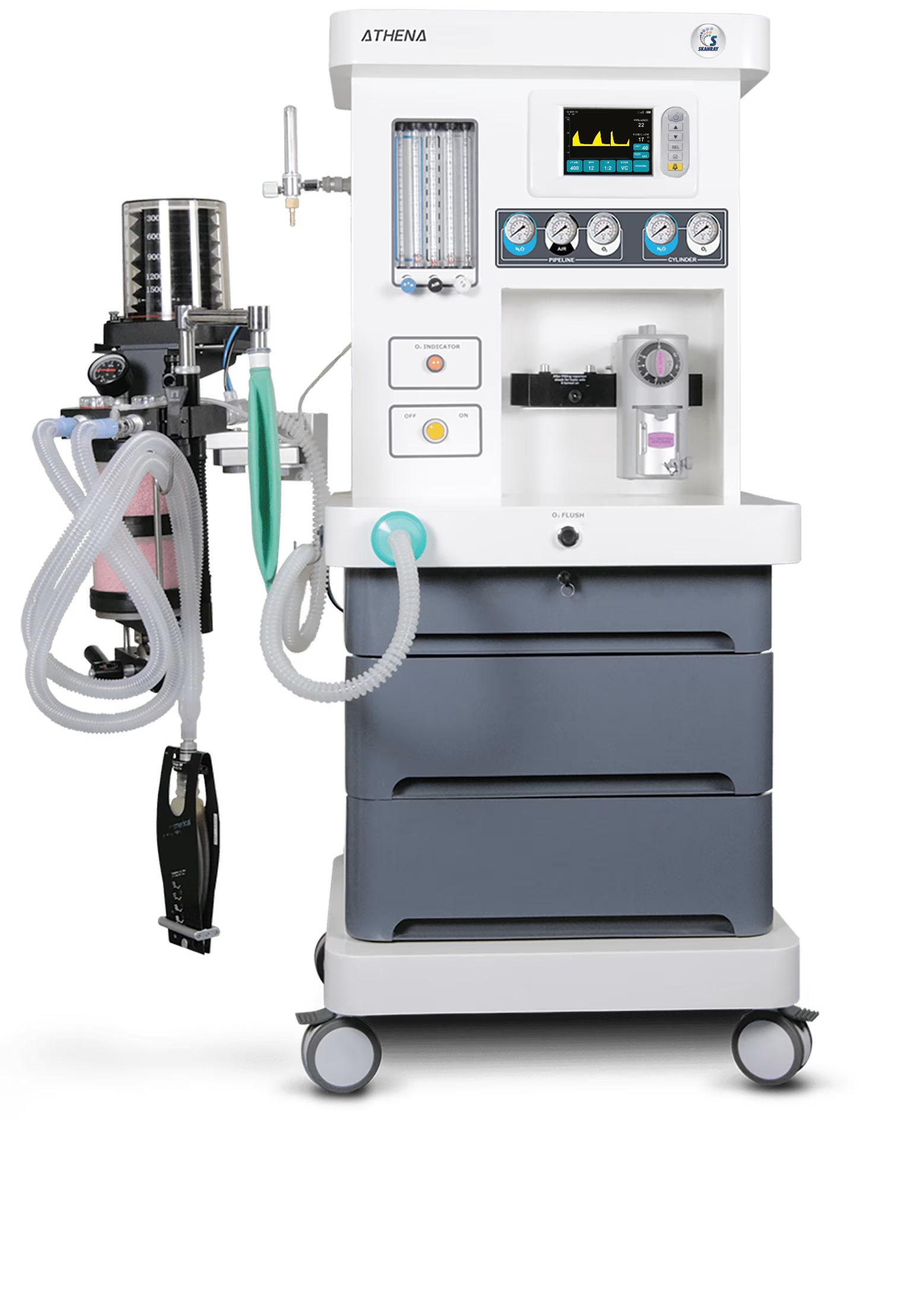
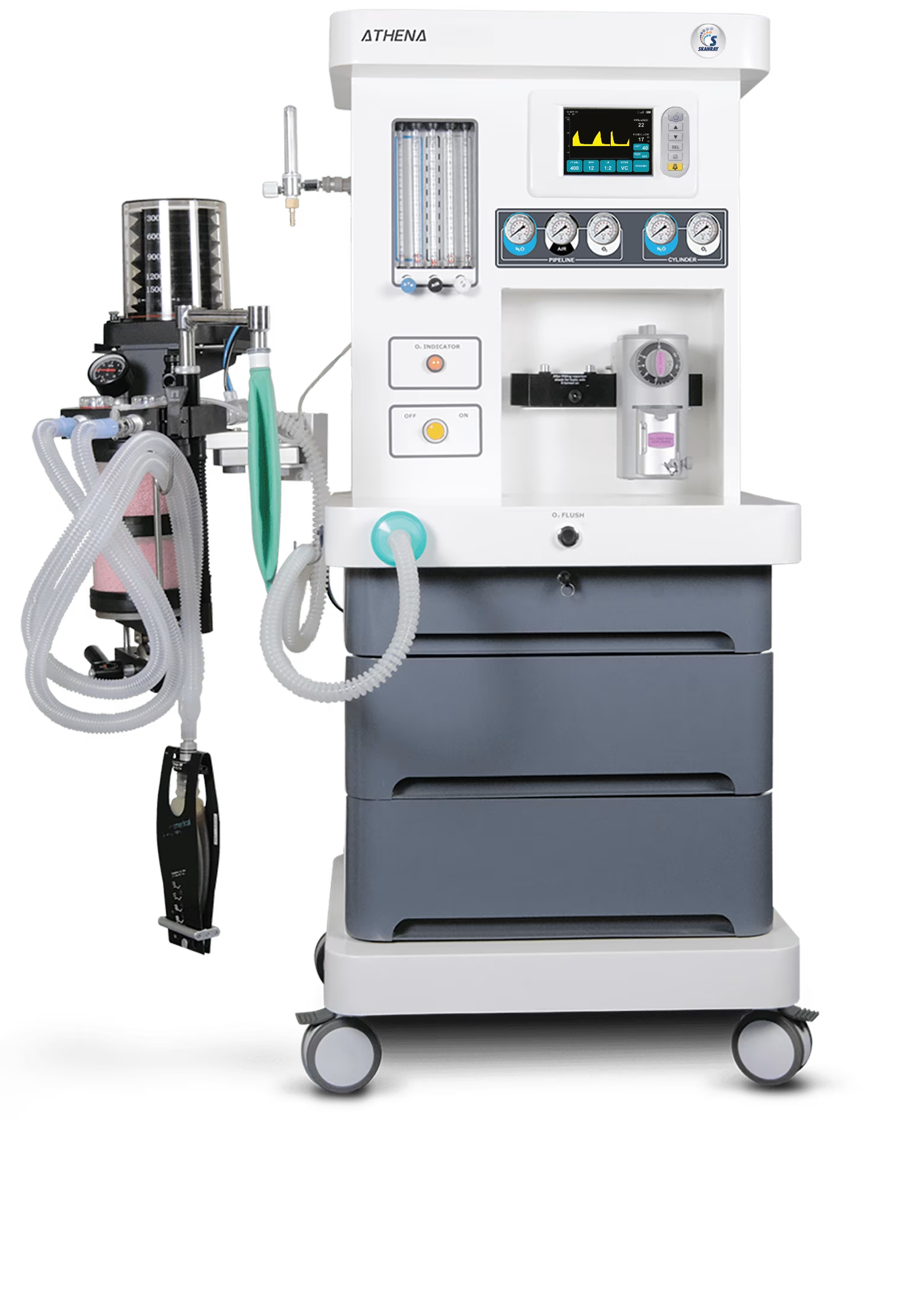
Athena-SV200 | Anaesthesia Work Station
Contact our team for pricing, configuration options and availability.
Thanks! Our team will contact you shortly.
- Dedicated additional N2O cutoff
- Independent Auxiliary O2 output
- AHD with ratio control
At a glance
- 3-gas, 5-tube low-flow anaesthesia workstation with a 6.5" wide display
- Dedicated additional N2O cutoff and independent auxiliary O2 output
- Anti-hypoxia device (AHD) with ratio control for patient safety
- Internal 3-liter O2 reservoir as an emergency backup oxygen source
- CMV-VC/PC and spontaneous (SP) ventilation modes with adjustable I:E ratio (3:1 to 1:8)
- Real-time Paw, FiO2 and PIP monitoring
- Internal 3-liter O2 reservoir
- 6.5” wide display
- Modes : CMV-VC/PC, SP
- I: E ratio: 3:1 to 1:8
- Paw display
- FiO2 monitoring
- PIP measurement
Frequently asked questions
What type of anaesthesia workstation is the Athena SV200?
It is a 3-gas, 5-tube low-flow anaesthesia workstation intended for operating-theatre use, combining gas delivery with integrated ventilation.
What ventilation modes are available?
It offers controlled mandatory ventilation (CMV-VC/PC) as well as a spontaneous (SP) mode, with an adjustable I:E ratio from 3:1 to 1:8.
How is patient oxygen safety protected?
An anti-hypoxia device (AHD) with ratio control helps prevent an unsafe O2/N2O mix, and an internal 3-litre O2 reservoir with a dedicated N2O cutoff provides a backup oxygen source if pipeline supply is interrupted.
What can the display monitor?
The 6.5" wide display shows airway pressure (Paw), FiO2 and peak inspiratory pressure (PIP) in real time.
Can it run on central gas supply or cylinders?
O2 and N2O can be supplied through either central pipeline or cylinder supply, giving flexibility for different OT setups.
Who should operate this machine?
It should be operated only by trained anaesthesia staff, as with any anaesthesia delivery system.
Related products
Related reading
Anesthesia
Advancements in Non-Invasive Monitoring Techniques for Pediatric Anesthesia
Explore the latest advancements in non-invasive monitoring techniques that enhance patient safety during pediatric anesthesia procedures.
Read article AnesthesiaExploring the Use of Anesthesia in Outpatient Endoscopic Procedures: Benefits and Best Practices
This article delves into the role of anesthesia in outpatient endoscopic procedures, highlighting its benefits and best practices for patient safety.
Read article